
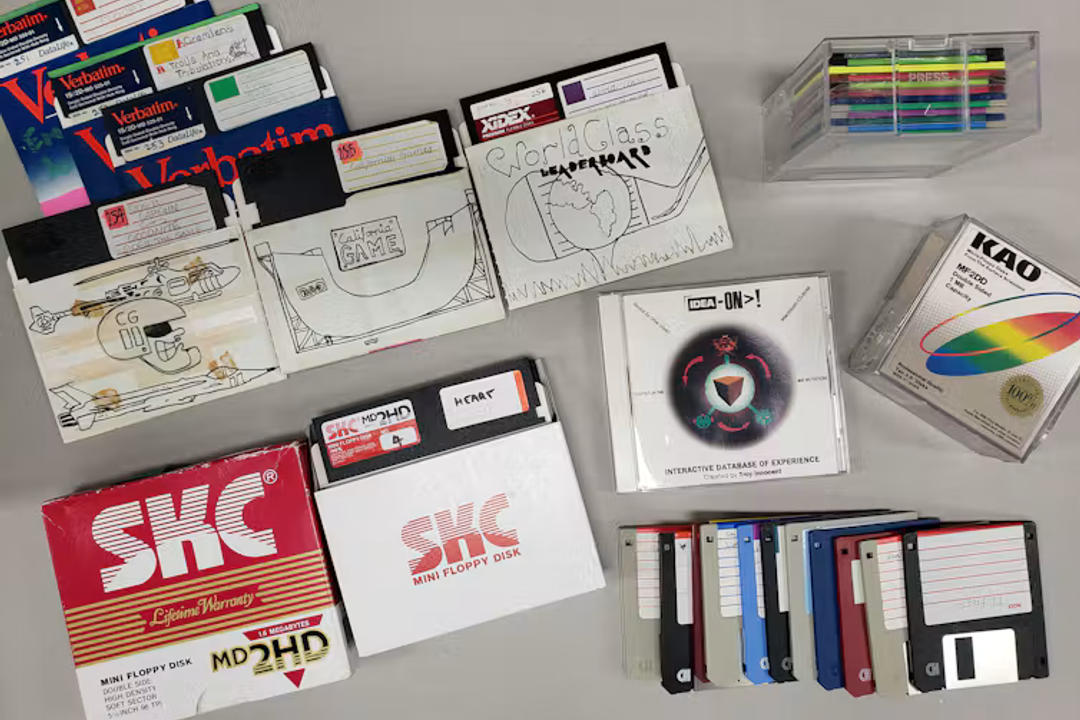
Data from the 1980s and 1990s is fading as modern computers can't read old disks
Archivists use disk imaging to save the 8% of readable old CD-ROMs before data vanishes.
Decades of personal records, family photos and cultural heritage sit on floppy disks and CD-ROMs. Modern computers cannot read them.
New machines have no drives for them, and old software won't run on current systems. Physical disks also fail at high rates.
In one study, only 8% of old CD-ROMs could still be read today. Archivists are racing to save this material before it vanishes.
Using restored vintage equipment, they create digital copies of entire disks and store them on modern systems. The Royal Historical Society of Victoria brought in materials including genealogy records, oral histories and photographs of historical engineering projects.
One member retrieved six floppy disks with files for a discontinued genealogical program from 1996. She thought they were gone.
It's almost magic, she said after archivists recovered the files. The recovered data can now move to new formats, keeping it safe as technology changes.
- 8 percent
- Readable CD-ROMs
- 6 floppy disks
- Member's recovered disks
- 1996
- Genealogy program year
- Royal Historical Society of Victoria
- Organisation involved
Why it mattersWithout preservation now, family histories, unpublished memoirs and everyday records will simply disappear, leaving a gap in our shared past.
AustraliaAustralian archives, libraries and smaller historical organisations hold significant digital collections at risk of being lost. Specialists are working with groups like the Royal Historical Society of Victoria to save this material before the media deteriorates beyond recovery.
✓ Claims checked against the source and corrected before publish. checked 2 h ago