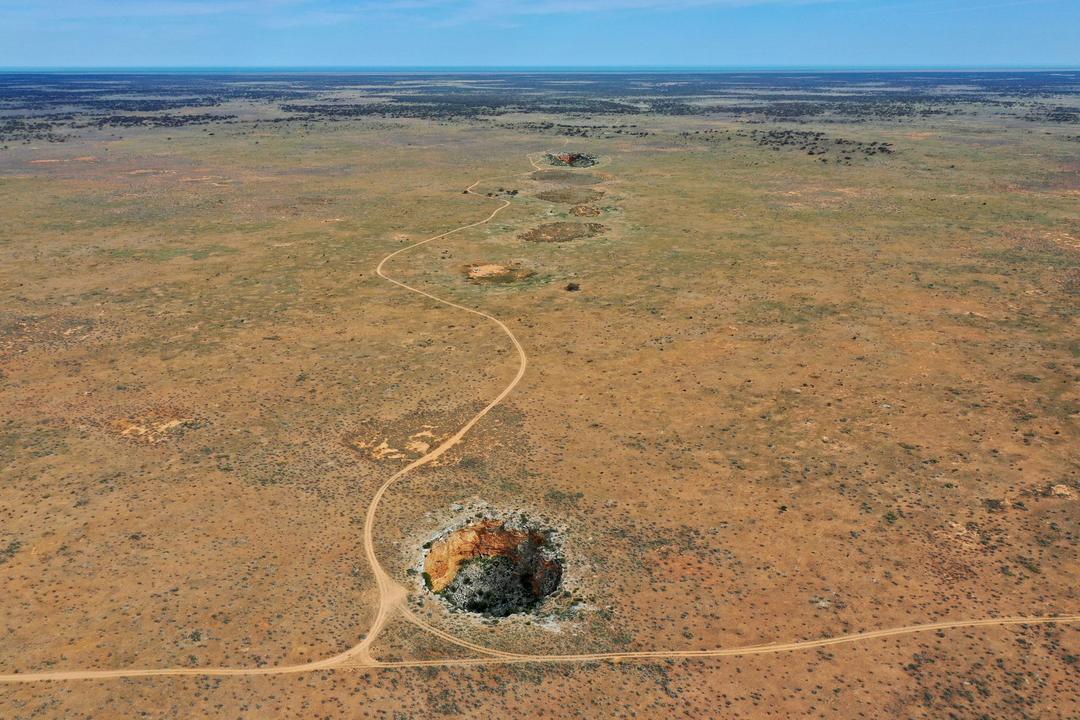
How hidden Nullarbor cave networks could reveal secrets of alien worlds
Australian researchers developed a new method to detect hidden underground cave systems. It could help find caves on other planets.
The Nullarbor Plain is a vast 200,000 square-kilometre limestone region in southern Australia. Over millions of years, water carved complex cave networks beneath it.
Most of these caves remain hidden underground. They are only accessible where they break the surface.
A new study in Communications Earth & Environment shows how researchers mapped these invisible caves. They used shallow surface trenches visible in satellite images and drone photography.
These trenches stretch up to 20 kilometres long but are only a few metres deep. They sit directly above deep zones of broken rock and known cave systems.
The team combined aerial surveys, borehole measurements, and geophysical imaging. This is similar to an X-ray of the Earth.
This method works because water dissolves limestone in predictable patterns. This creates surface markers we can recognise.
Scientists say the same approach could help identify underground caves elsewhere. This includes caves on distant planets or moons.
- 200,000 square kilometres
- Nullarbor area
- up to 20 kilometres
- Trench length
- 14 million years ago
- Sea retreat age
- Communications Earth & Environment
- Publication
Why it mattersThe technique offers a new way to explore cave systems from above without digging. This matters for planetary science. It also helps us understand hidden environments better.
AustraliaAustralian researchers are advancing how we map underground networks beneath Australia itself, and developing tools that could be used in space exploration.
✓ Claims checked against the source. checked 7 d ago